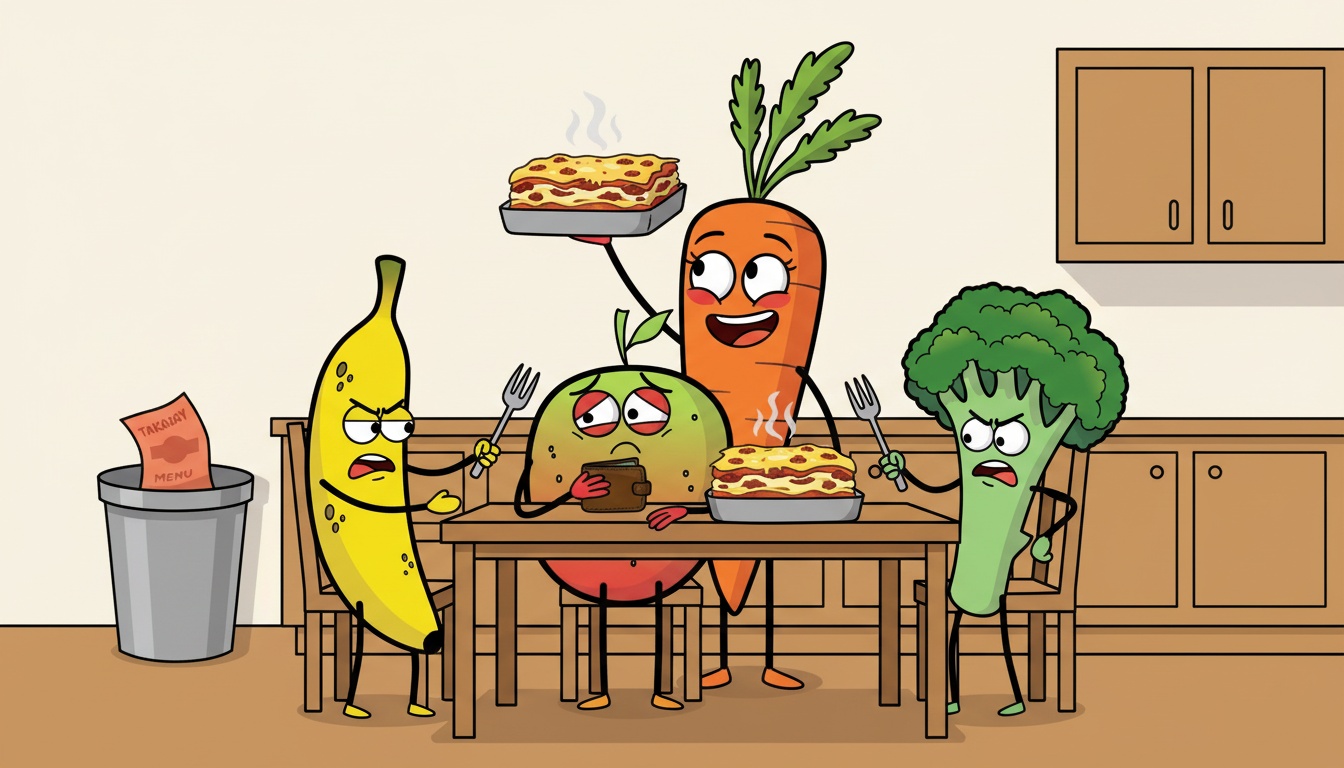
How Much Does Cooking at Home Actually Save? Real Numbers from Real UK Families
The Thursday Night Maths
It's 6pm on a Thursday and you're staring into the fridge like it might suddenly reveal answers. There's half a pepper, some suspect chicken and three yoghurts past their best-before date. Meanwhile, the Deliveroo app is already open on your phone because you know exactly how this ends.
A medium pizza, sides, delivery fee. £35. Again.
We wanted to know: how much does cooking at home actually save in the UK when you're an exhausted parent with an actual family to feed, not a lifestyle blogger with three hours and a larder full of exotic grains?
So we asked real families to track it.
What the Numbers Actually Show
When families swapped just three takeaways a week for home cooking, the average saving landed somewhere between £240 and £400 per month. That's not a typo. One family in Bristol was spending £180 weekly on deliveries and grab-and-go meals. They got it down to £65 by cooking at home four nights a week and doing one big shop with a list.
The trick wasn't perfection. It was having backup options that didn't involve scrolling through restaurant menus at 7pm when everyone's already melting down.
Batch cooking and freezing portions meant they always had something they could reheat faster than waiting for a driver. Staples like tinned tomatoes, pulses and grains became the backbone of quick, filling dinners that cost pennies per portion. One mum told us she'd been buying pre-chopped veg for years because she thought it saved time, until she realised she was paying triple for someone else to hold a knife.
Own brands saved pounds without anyone at the table noticing. Shopping online with a list killed the impulse buys that used to add £30-40 to every trip...
Get this: At Tucki, we interview 500 families and interrogated what they spend on groceries each week. When we did our exercise against what they could save... we found that the average family was overspending by £83 per week!! That's a hell of a lot over a year.
The Stuff Nobody Tells You
Here's the bit that surprised everyone: the biggest savings weren't actually always at the till.
They were in the bin!
Families who started cooking more threw away less. When you're planning what to eat and actually using what's in the fridge, that sad pepper gets roasted instead of rotting. Food waste dropped, which meant the money spent on groceries went further. One household realised they'd been wasting nearly £30 a week on things that never made it to a plate.
The other thing: eating together without screens meant kids ate what was in front of them instead of negotiating separate orders like a tiny board meeting. Cooking the same thing for everyone saved time, money and the mental load of running a short-order kitchen.
...and when kids helped with the cooking, even just stirring or setting the table, they were more invested in actually eating it. Funny how that works.
What This Actually Means for Your Household
Lower-income families spend a bigger share of their budget on food but often end up buying processed options because they're cheaper and faster in the moment. The irony is that home cooking improves health, wellbeing and family connection, but it requires time and a bit of upfront planning that feels impossible when you're already overwhelmed.
That's the behaviour problem, not the information problem.
You already know that cooking saves money. You've probably done the maths in your head a hundred times while waiting for that pizza. The gap isn't knowledge. It's the gap between knowing and actually doing it on a Tuesday night when you're exhausted and someone's crying about homework.
Tucki exists to close that gap. It's a behaviour change engine built for real families, helping you build sustainable habits around home cooking without the guilt or the complexity. Because the question isn't whether cooking at home saves money. It's whether you can actually make it happen in real life, when life is messy and your time is the most precious resource you have.
Start with one meal. That's it. Most families say they enjoy it once they try. The savings follow the habit, not the other way around.
Join The Habit newsletter