How to Build a Family Food Routine That Survives School Holidays
The moment they break up, everything falls apart
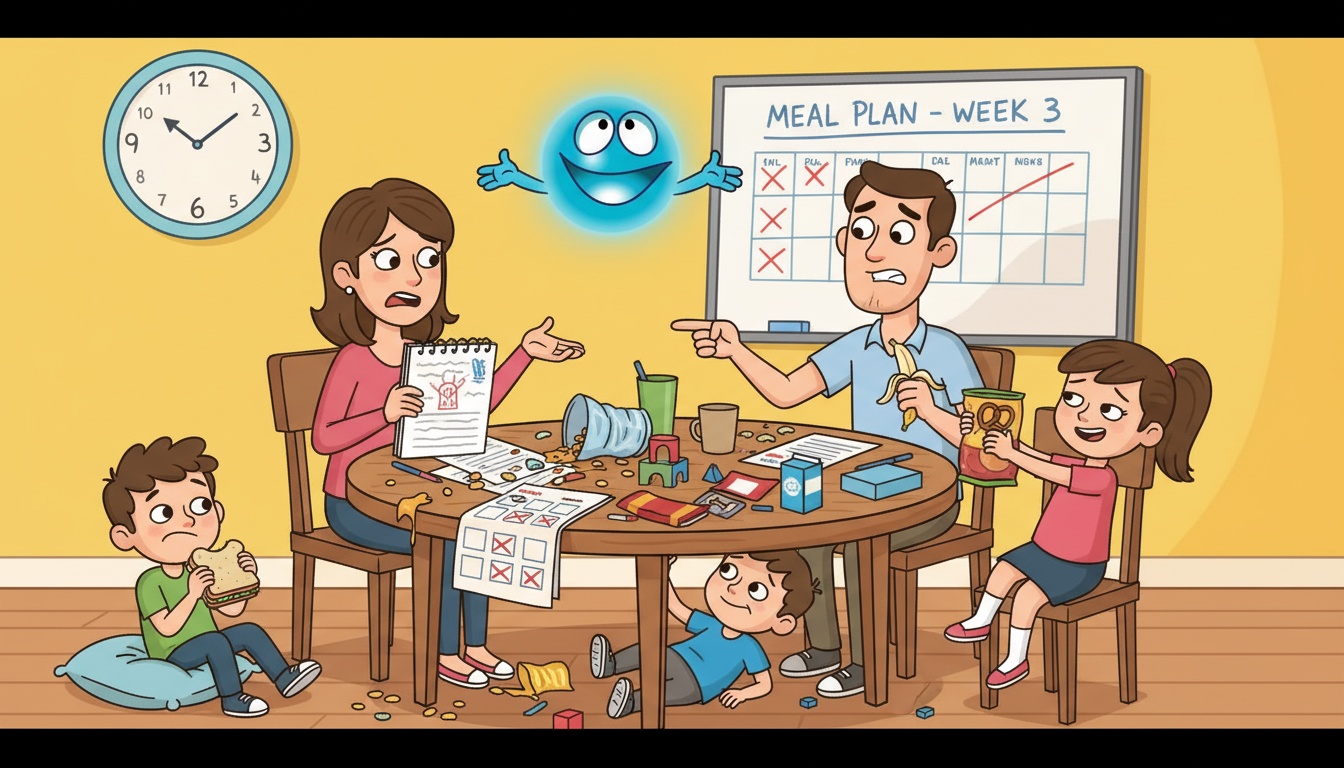
You had it sorted. Breakfast at seven, packed lunches done, dinner on rotation. Then school breaks up and suddenly everyone's home all day, the fridge is under constant siege, and you're cooking what feels like seventeen meals before lunchtime. Your family food routine hasn't just wobbled, it's face-planted into a pile of cereal boxes.
This is completely normal. Term time structure props up our habits more than we realise. Remove it, and we're all just tired humans trying to feed other humans who appear every forty minutes asking what there is to eat.
The good news? You don't need a perfect system. You need one that bends without breaking.
Why school holidays break our food habits
During term time, the day has a shape. Fixed school runs create natural anchors for when meals happen. School holidays dissolve all of that. Suddenly there's no external structure, everyone's hungry at different times, and you're making decisions all day long while also trying to keep small people from climbing the walls.
This is where UK households typically see food waste spike. According to WRAP's 2023 research, families throw away around 4.5 million tonnes of edible food every year, costing about £700 per household. Most of what gets binned is fresh veg and bread that simply got forgotten in the chaos. When routines collapse, so does our ability to track what we've got and actually use it.
The fix isn't more willpower. It's better systems that work even when life gets messy.
Building a family food routine that flexes
Forget rigid schedules. School holidays need something more forgiving. Here's what actually helps:
Anchor one thing, not everything. Pick a single daily constant. Maybe it's always eating breakfast together at nine, or always having dinner at six. That one steady point helps everyone orient, even when the rest of the day is chaos.
Make food visible. Write down what you're eating this week somewhere everyone can see it. Fridge, kitchen wall, wherever. A visible plan stops you buying things you already have and helps you use what's there before it goes sad in the salad drawer. This is one of the most effective ways to prevent waste, according to the same WRAP study.
Involve the kids without making it complicated. Let them choose one dinner each week, or put them in charge of checking what veg needs eating. It takes thirty seconds and gives them something to do that isn't asking you what there is to do.
Cook once, eat twice. Double up where you can. Bolognese becomes jacket potato filling. Roast chicken becomes tomorrow's wraps. Your future self will thank you.
It's behaviour, not information
You already know what makes sense. Eating real food at home more often. Using what you've got. Planning just enough to avoid the four o'clock panic. The hard bit is actually doing it when everyone's home and hungry and you've already answered "what's for lunch" six times before ten in the morning.
This is exactly the behaviour gap that Tucki helps families close. Not by telling you what to eat, but by helping you build routines that stick even when school's out and structure's gone. Small habits, built together, that actually survive real life.
School holidays don't have to mean six weeks of snack chaos and bin bags full of forgotten vegetables. You just need a family food routine that's strong enough to hold, but flexible enough to bend.
Join The Habit newsletter