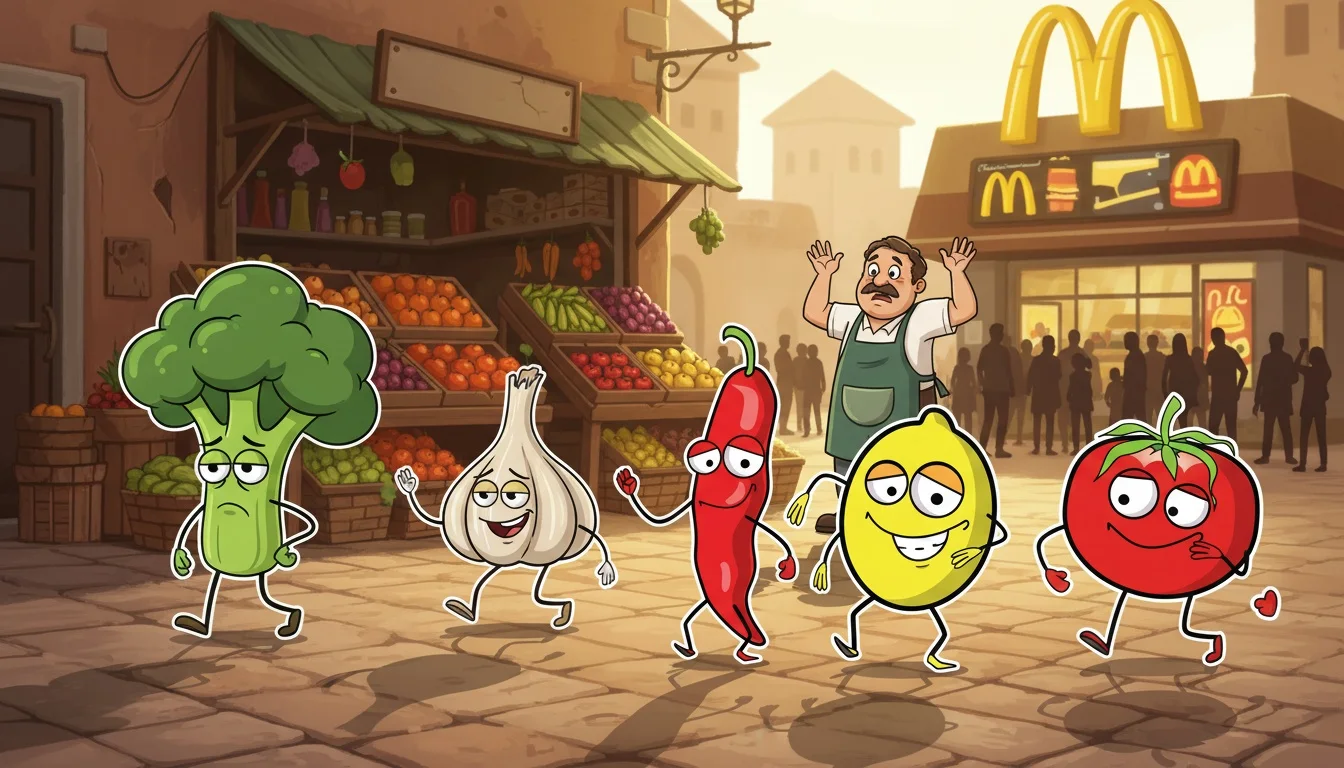
How Italy Lost the Mediterranean Diet in One Generation
The Mediterranean diet was never a choice
So...here's an uncomfortable truth you might have read about because of a shocking BBC article ... firstly, I must reason (and I struggled with this ) but the Mediterranean diet wasn't a lifestyle and...it wasn't a philosophy. It was 'cucina povera', poverty food, shaped entirely by scarcity. Italian families ate vegetables, pulses, olive oil and occasional fish because that's really what they could afford and what grew locally. But like in the rest of the west, the moment incomes rose (generally) and industrialised food arrived with marketing budgets in the 1980s and 90s until present day...the diet has pretty much collapsed in a single generation. Yea, this breaks my bloody heart. Italian food is my mothers favourite and the thing we all learnt to cook when we were young.
Now Italy has one of the highest childhood obesity rates in Europe! Seriously, I still can't believe it. In Campania, the region around Naples, 40% of young children are overweight. Paediatric bariatric surgery demand is rising sharply among teenagers as young as 16. The country that gave the world the Mediterranean diet now has kids lining up for stomach surgery.
So what happened? ...and why should families in Birmingham or Manchester care about what's happening in Ponticelli?
Ultra-processed food doesn't compete. It wins.
Ultra-processed food isn't just convenient or tasty. It's engineered. As Chris van Tulleken points out in his works, most UPF is a set of industrially created synthetic molecules designed for maximum profit and palatability, not nutrition. One study showed that people eating identical-nutrient diets consumed 500 extra calories daily when the food was highly processed versus whole food. You eat more because it's designed to make you eat more. (again, I must stress, it's not ALL bad and the people making it are not evil, you just gotta realise that it is engineered to make you eat more).
UPF now makes up > 60% of the UK and US diet. It's grown steadily since the 1970s, directly tracking obesity rates which tripled in children over 30 years. Italy followed the same pattern, just a bit later and now the 'real food sweetheart' of Europe is not doing so great with it either. Corn subsidies from the 1970s onward deliberately cheapened UPF ingredients while enriching food corporations. The result is that ultra-processed food is now cheap, and healthy eating is perceived to be more expensive. They diverge along income lines, which is why child obesity in Campania maps exactly onto deprivation, just like it does in the UK.
Italian grandmothers didn't forget how to cook. The price of tomatoes didn't suddenly spike. What changed is that a child can now get 1,000 calories of engineered pleasure for less than the bus fare home and fresh vegetables require time, skill, patience and money that exhausted parents increasingly just don't have.
So do we wait to be saved or do we adapt and make real food our first love again?
Italy is now fighting back with the wrong tools
Italy's 2025 chronic disease law reframes obesity beyond individual choice, recognising biological, environmental and social factors. Ok, that's good I guess. But the interventions being tested reveal a slight errr disconnect. Fasting-mimicking diet trials are recruiting 300 adolescents for protocols with 770 to 1,100 calorie days. Teenagers! Specialists are rightly warning about eating disorders and long-term psychological harm to kids still forming their relationship with food.
Meanwhile, cultural attitudes do persist. Neapolitan parents often view 'chubby' children as healthy, creating resistance to intervention. Look nothing wrong with a bit of stockiness of course but it's really what's going on inside at the cell level that I always care about.
Schools are being used as channels to push education home through children rather than parents (which I am a big fan of! but we need to close the loop - the healthy bite needs to not just stay at school)... and then the medical system is debating whether aggressive intervention like surgery, GLP-1 drugs or fasting protocols can outrun the damage before it becomes permanent.
But here's the problem: none of that addresses the food environment. You can educate, medicate, and operate all you want. If the cheapest, most accessible, most heavily marketed food in every corner shop is still engineered to trigger overeating, you're bailing out a boat with a hole in it.
This is a global problem, and it requires better behaviours or habits, not just better information
Italy's story is every country's story, just on fast-forward. The UK is a decade ahead on the same curve. The US is further still.
The solution isn't more nutrition advice. Parents already know vegetables are healthier than crisps. The issue is behaviour, not information. It's helping families cook at home more often, reduce their waste or overspending, plan better and push back against the food environment in small, managable ways (we don't want them to go out of business, just stop treating our eating habits like a product).
Italy didn't lose the Mediterranean diet because people stopped caring. It lost it because the environment changed faster than behaviour could keep up. The same thing is happening here.
That's what Tucki is built for: NOT another source of shame or information overload, but a tool to close the gap between what you know and what you actually do.