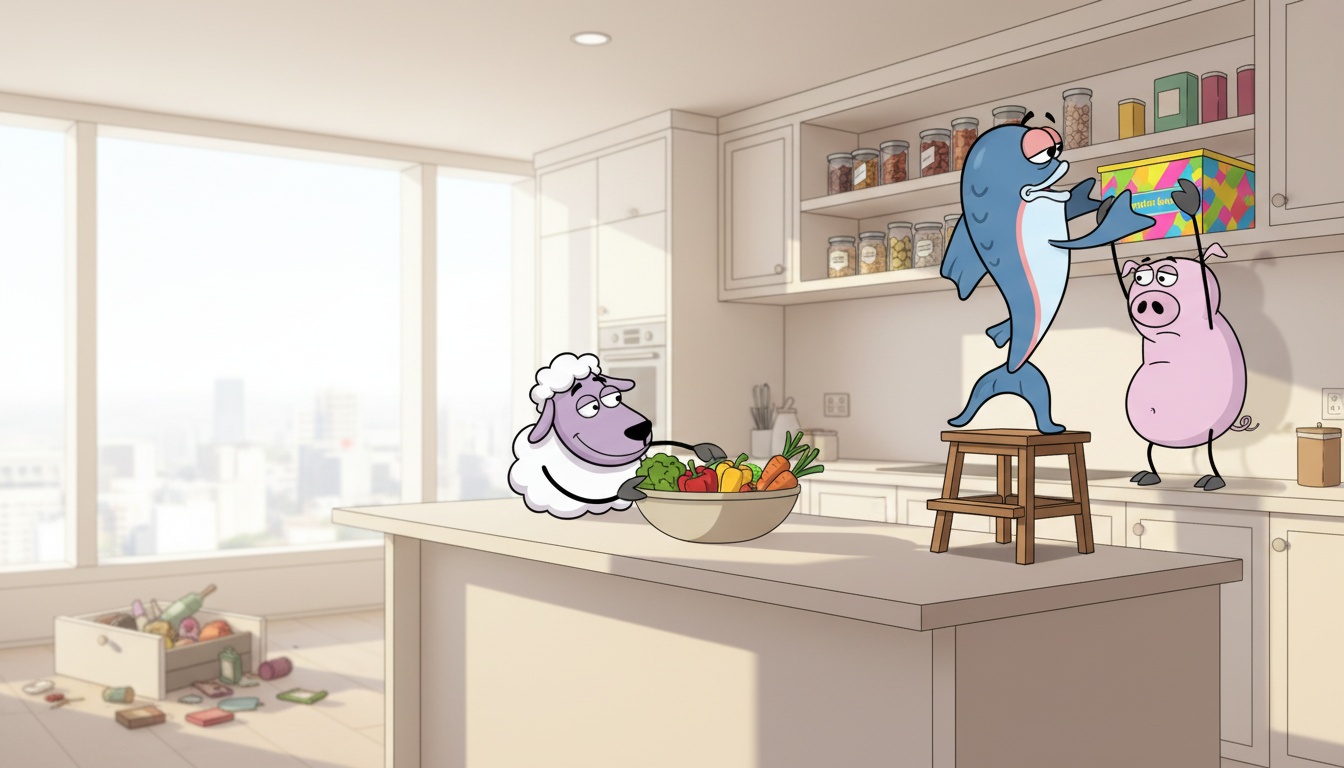
How to Master Good Food Habits by Changing the Environment, Not Willpower
You can't fight your kitchen and win
You know the broccoli belongs on the plate. You know the biscuits should stay in the cupboard until after dinner. You know all of this... and yet at 4pm on a Wednesday when everyone's tired and someone's whining about being hungry, the crisps win again.
This isn't a willpower problem. It's an environment problem. This must be understood first.
The science is clear: when researchers fed people identical nutrients on two different diets, one built from whole foods and one from ultra-processed food, participants consumed 500 extra calories daily on the UPF diet without even noticing. The difference wasn't knowledge or discipline. It was the food itself, engineered for maximum palatability and profit. UPF now makes up over 60% of UK diets and it's designed to override your natural fullness signals.
But here's the thing: you can't 'willpower' your way out of a badly designed food environment. You can, however, redesign the environment so the right choice becomes the easy choice.
The cue matters more than the craving
Habit science tells us that behaviour follows a simple loop: cue, routine, reward. Most parents focus on changing the routine (swap crisps for carrot sticks), but the real leverage is in changing the cue.
Children need 8 to 15 exposures to accept a new vegetable, but negative food associations form in just 1 to 2 tries. That's why forcing broccoli at a stressful dinner creates a broccoli-hater, while casually serving it at a relaxed family meal 12 times eventually creates a broccoli-eater.
The environment controls the cue. If the biscuit tin lives on the counter, the cue is visual and constant. If it's in the back of a high cupboard, the cue barely exists. If pre-chopped veg sits at eye level in the fridge and the good snacks are visible when the kids open the door, you've just made the healthy option the obvious one.
This isn't about banning foods or creating shame. It's about making your kitchen work with human nature instead of against it. Kids mirror what parents eat, not what parents say about food. Family meal patterns predict adult eating habits better than any nutrition lecture ever will.
Environmental design beats willpower every time
James Clear's habit research shows that the 30-second window matters more than the full task. It's not whether you can resist the snack, it's whether the snack is within 30 seconds of your hand when you're stressed.
Here's what that looks like in practice:
Keep one shelf in the fridge for grab-and-go real food: cheese cubes, hummus pots, cherry tomatoes, hard-boiled eggs
Put a fruit bowl on the table, not tucked away in a corner
Batch-cook one or two base ingredients on Sunday (roast chicken, rice, chopped veg) so weeknight cooking starts halfway done
Remove the cereal boxes from the counter; store them in a cupboard so they're a deliberate choice, not a reflex
Involve your kids in meal planning and table tasks; investment builds habits faster than rules ever will
Screen-free family meals help children learn to eat to appetite and recognise fullness cues. A relaxed, sociable mealtime environment directly impacts how children view food long-term. Routine mealtimes help children understand structure and can naturally stimulate appetite.
None of this requires perfection. In fact, rigidity kills habits faster than anything else. The goal is consistency on the messy days, not flawless execution.
Build the environment, build the habit
You already know what good food habits look like. The gap isn't information. It's the dozens of tiny decisions your environment makes for you before you even realise you're choosing.
Tucki helps families close that gap by building 'sustainable routines' around real food and home cooking, not by lecturing you about vegetables or counting anything. It's designed for real life: messy, imperfect, and busy.
Master good food habits by changing what's easy, not by fighting what's hard. Your kitchen should work for you, not against you.
Join The Habit newsletter