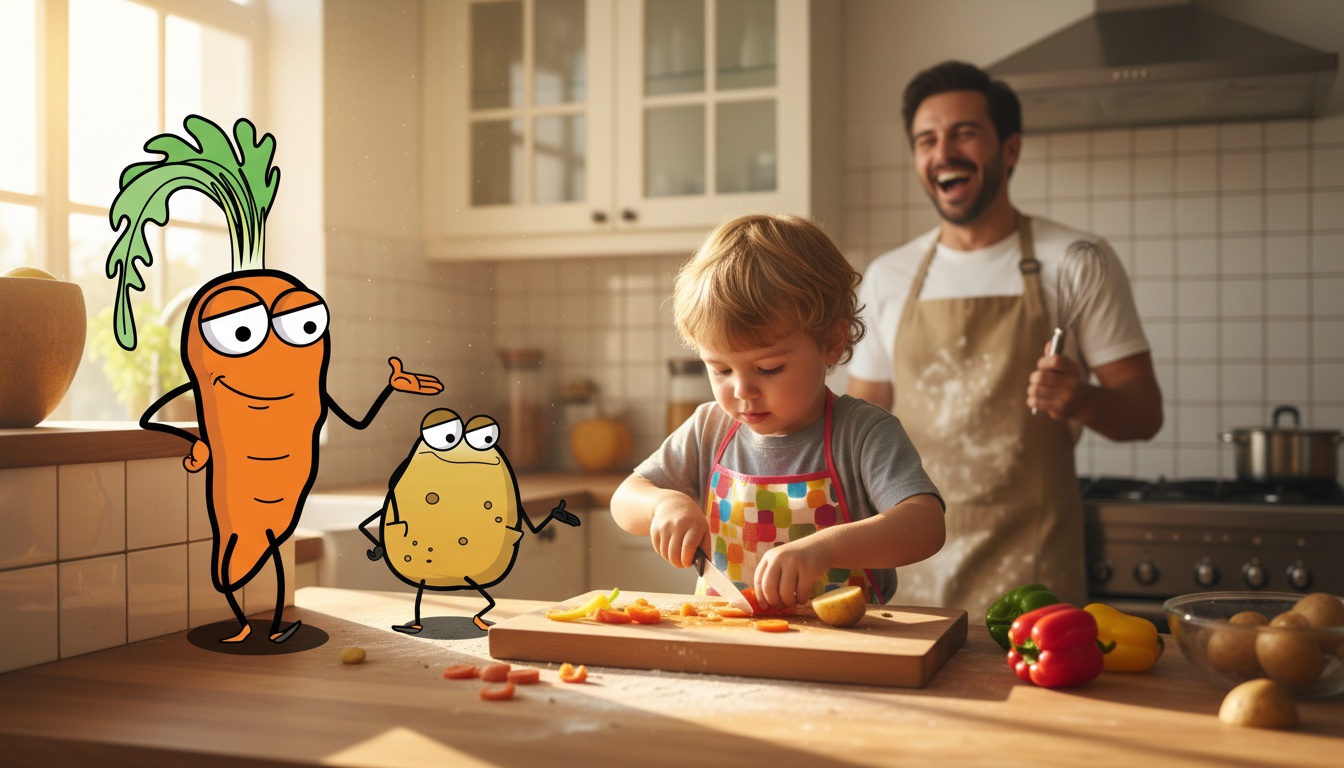
How to Use the School Holidays to Build Food Habits That Actually Stick
The holidays are your secret weapon
Here's what nobody tells you about the school holidays: they're not just a logistical nightmare to be survived!! lol. They're actually your best shot at building food habits that stick when term starts again.... ok, hear me out
I've got two girls somewhere between kids and teenagers and I've accidentally discovered something brilliant. When you've got time stretching ahead and everyone's home, you can make food the central point of the day without it feeling like a chore. Not in a worthy, let's-all-learn-about-nutrition way. In a chaotic, flour-everywhere, someone's-eaten-all-the-chocolate-chips way.
The school holidays give you permission to slow down. To let them actually measure the rice. To argue about whether garlic goes in before or after the onions. To discover that your ten-year-old has strong opinions about seasoning.
Make it about challenges and curiosity, not recipes
Forget following instructions perfectly. The holidays are when you can set proper challenges that get them thinking.
Try these: who can make the best sandwich using only what's in the fridge right now? Can we recreate that pasta we had on holiday using completely different ingredients? What happens if we double the cheese in this?
Involving kids in cooking isn't about teaching them to follow a recipe. It's about making them curious. About letting them fail. About discovering that burned garlic tastes horrible and that's actually useful information.
One of my daughters now insists on making her own breakfast every morning because she spent a week last summer experimenting with different ways to scramble eggs. The kitchen looked like a crime scene, but she learned something that actually matters: she can feed herself, and she quite likes doing it.
Team work makes it less exhausting for you
Let's be honest: getting kids involved in cooking during the holidays sounds exhausting...and sometimes it is.
But here's what I've found: if you frame it as teamwork rather than teaching, it gets easier fast.
Give them ACTUAL responsibility. Not stirring-the-sauce responsibility. Proper jobs. Let them shop with you and choose three vegetables for the week. Put them in charge of breakfast for everyone on Tuesdays. Ask them to work out what we can make from what's left in the cupboard before we do the big shop.
Children who eat regularly with families eat more fruit and veg and develop less fussy habits through observation and repeated low-pressure exposure. But that only works if they feel like participants, not passengers. Involving children in cooking and serving builds interest and confidence without pressure or performance anxiety.
The holidays give you time to let them actually do the thing, not just watch you do it while they complain about being bored.
Make food the most important source of your day
Food is literally the most important source of our life. Not exercise plans or educational apps or screen time limits. Food. The stuff we put in our bodies multiple times every single day.
So why do we treat it like an inconvenience to be outsourced to whoever's fastest?
The school holidays let you flip that. Make lunch the event. Build the day around what you're cooking for dinner. Let them invite a friend over and work out together what they want to make.
I'm not talking about perfection here. Some days it's going to be fish fingers and oven chips because everyone's tired and the pool ran late. But on the days when you've got energy, make cooking the main thing. Not a task to rush through before the real fun starts. The actual fun.
Routine mealtimes help children understand structure and can naturally stimulate appetite. A relaxed, sociable mealtime environment directly impacts how children view food. The holidays give you time to build that environment without the weeknight panic.
What happens when September comes
Here's the thing: habits built during unstructured time have a weird way of surviving when structure returns. That kid who learned to make pasta in July will remember in October. The teamwork you practiced when everyone was home becomes the routine you fall back on when everyone's exhausted.
You're not trying to create perfect little chefs. You're trying to make cooking something your household does together, even when it's messy and imperfect and someone's crying because their sister got the better knife.
Tucki's built around exactly this: helping families actually do the food habits they already know matter. Not through rules or restrictions, but through practical tools that work in real life with real kids who have real opinions about vegetables.
Start with one challenge this week. Let them choose it. Make it about curiosity and teamwork, not getting it right. And see what happens when food becomes the thing you do together, not the thing you do to them.
Join The Habit newsletter