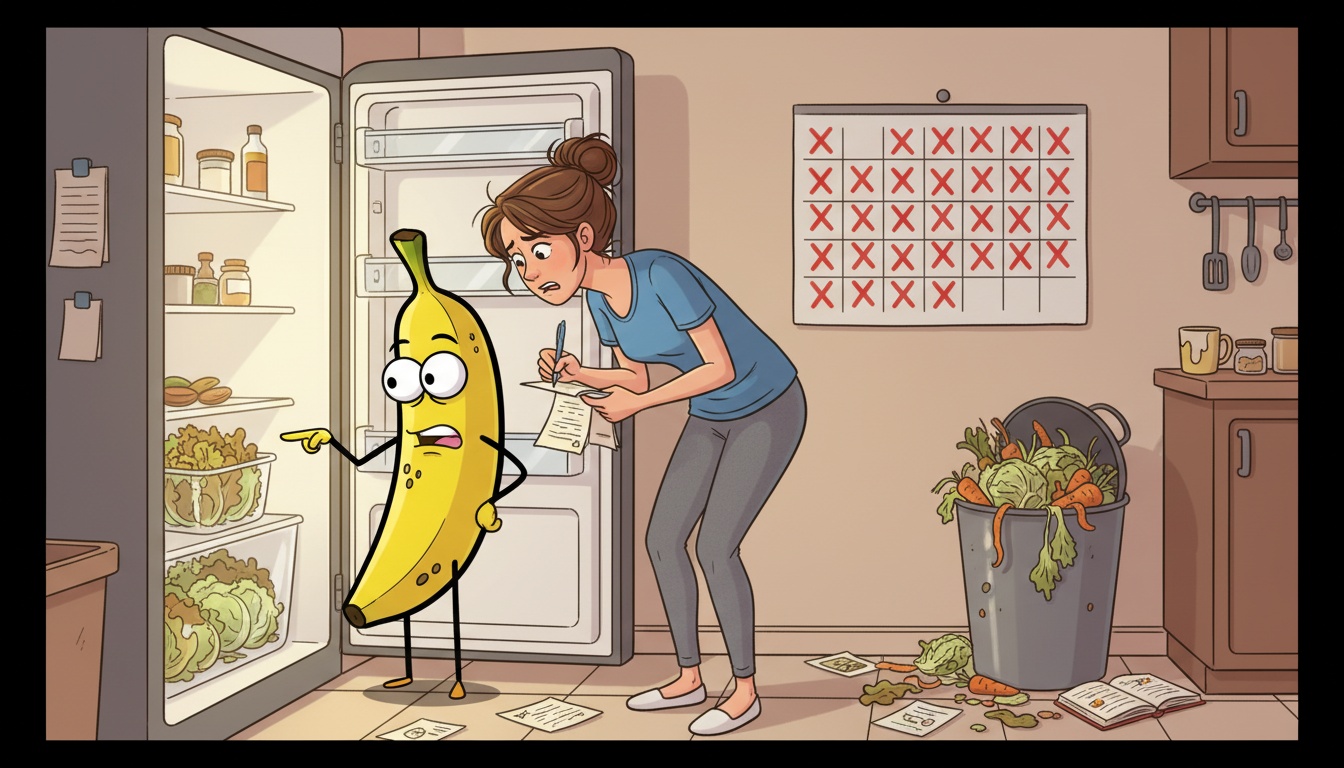
The Real Cost of Winging It: What Food Waste Is Actually Costing Your Household
Your weekly shop is leaking money
You bought the courgettes with good intentions. They sat in the drawer while you ordered pizza twice, grabbed a supermarket sandwich, and cobbled together pasta with whatever was left. Now they're mush, and into the bin they go. Again.
You're not alone, and you're not failing. UK households throw away around 4.5 million tonnes of edible food every year, according to a 2023 WRAP study. That's worth about £700 per family, annually. Most of it? Fresh veg and bread that simply got forgotten.
The real kicker is this: you probably knew exactly what you should cook this week. You just didn't have a way to actually follow through when Tuesday got messy, someone had a meltdown, and the courgettes became invisible.
The problem isn't your willpower
We've been told for years that reducing waste is about trying harder, being more organised, or meal prepping on Sundays like some kind of domestic hero. But here's the truth: the fix is not more willpower. It's better systems.
When you're juggling work, school runs, and keeping tiny humans alive, your brain has about twelve seconds to decide what's for dinner. If that decision requires excavating the fridge, cross-referencing what's about to go off, and improvising a recipe, you'll default to the path of least resistance every time. Usually chips.
The families who manage to reduce food waste family wide aren't superhuman. They've just built routines that make using what they already have the easier choice, not the harder one.
What actually works (no perfection required)
A visible structure for the week helps prevent food waste, according to the same WRAP research. Not a rigid schedule, just something that reminds you the peppers exist before they turn to liquid.
Using what you already have before buying more is the other big one. Sounds obvious, but in real life it means having a quick way to see what's lurking, what needs eating, and what you can actually make with it before you add another bag of spinach to your order.
This is where behaviour change beats information every time. You don't need another article about batch cooking or zero waste hacks. You need a routine that works on the days when everything goes sideways.
Building habits that actually stick
At Tucki, we've built a tool that helps families close the gap between knowing and doing. It keeps track of what you've got, nudges you to use it, and makes home cooking feel less like a puzzle you're too tired to solve. Because reducing food waste as a family shouldn't require a personality transplant or an extra three hours you don't have.
Start small. Pick one habit: check the fridge before you shop, or cook what's wilting first. Do it badly, do it imperfectly, just do it more often than you did last week.
That £700 a year isn't just money. It's time you spent shopping, stress you carried, and guilt you swallowed every time you opened the bin. Better systems mean less waste, lower bills, and one less thing to feel rubbish about. And that's worth more than perfect courgettes any day.
Join The Habit newsletter